When a member cancels, the first thing most creators do is wonder if the price is too high.
Sometimes they lower it. Or post more frantically for a week. Or just accept it.
Usually the price is not the issue. Members who leave a ₦4,000 per month community did not suddenly decide they cannot afford ₦4,000. They decided ₦4,000 was not worth it anymore. Which is a harder thing to fix, but at least it tells you what actually went wrong.
Most cancellations happen because the renewal date arrives and the member cannot immediately remember why they joined. The community might be posting the same content it always posted. The problem is that nothing reminded them why they were there. Here is how to reduce churn in your paid community before it becomes a pattern.
What causes members to leave
The most common reason is posting consistency dropping off. Creators launch strong: daily posts, quick responses, energy in the group. A couple of months in, things slow down. Posts drop from daily to three times a week to whenever. Members do not send a complaint. They just go quiet, and eventually cancel.
Another is that wins stay invisible. A member followed your stock tips and made a profit. Someone found a supplier contact through your community and saved money on their next order. You never knew. They felt good privately and moved on. If those results had been shared in the group, other members would have seen them as a reminder of what they were paying for.
And sometimes members just lose the thread of why they joined. The content is still useful, but nothing keeps bringing it back to the original reason they paid. By the time renewal comes around, they are already halfway out.
A fourth reason is that the first 30 days were weak. Members who do not engage in the first week rarely renew at month two. The problem started before you noticed.
The first 30 days matter most
Most creators focus retention efforts at renewal time. That is the wrong moment. By the time a member is considering whether to cancel, their decision is already 80 percent made. The real retention work happens in the first 30 days.
When a new member joins, they are deciding three things in the first week: is this what I expected, is this worth the price, and am I going to use this? If none of those questions get answered in the first seven days, the member becomes passive. Passive members do not renew.
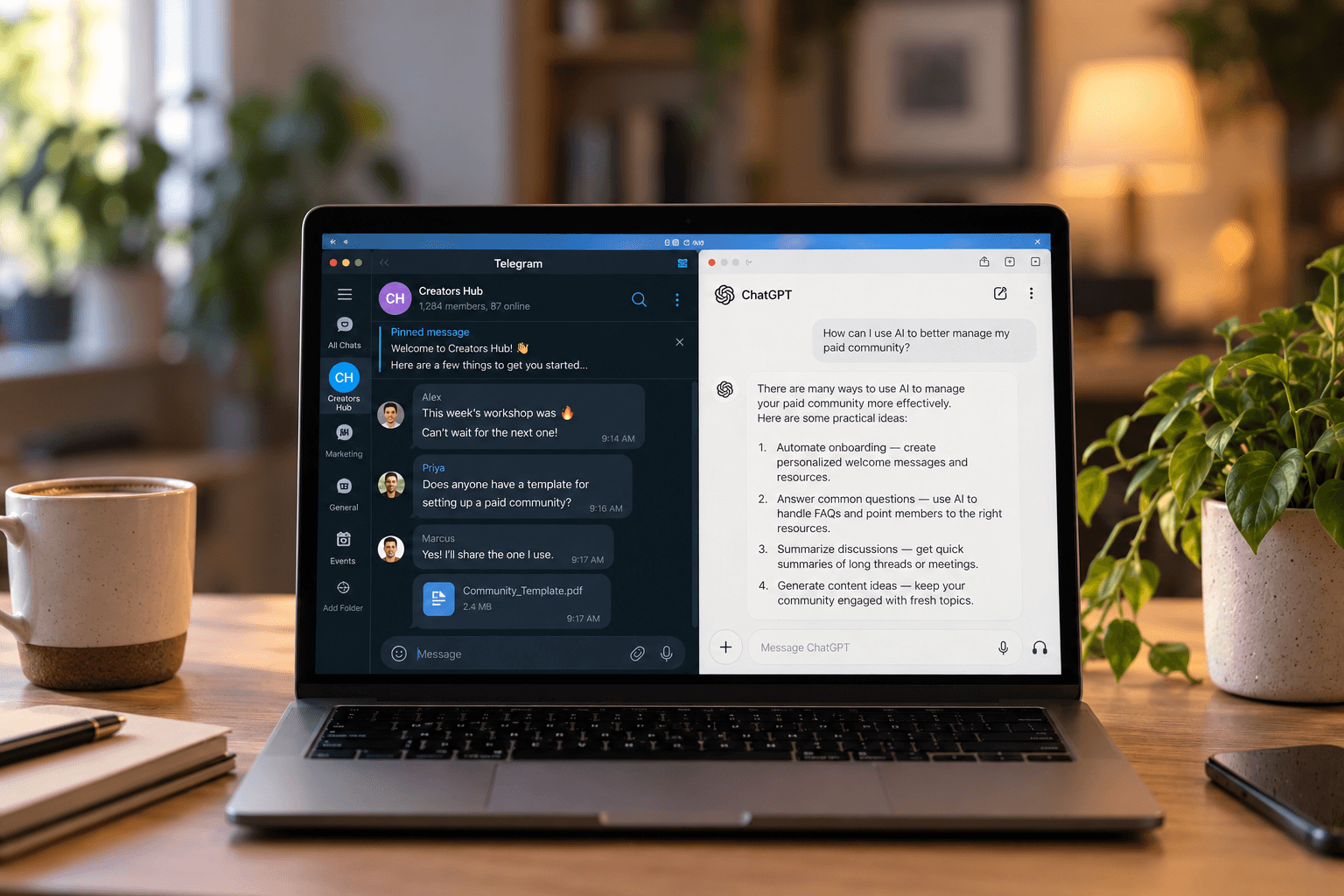
Pin a detailed welcome message in the group. Tell new members exactly what a typical week looks like, what to do in the first 48 hours, and where to post their questions. Members who know what to do when they arrive engage immediately. Members who join and feel unsure about what they signed up for disengage before the first month is over.
Tag new members by name in their first week. Not just a generic welcome, but a direct acknowledgement: "Welcome to the group. What are you focused on this month?" One targeted message from the creator in the first week changes how a new member relates to the group for months after.
If you run a coaching or signals community, make sure the new member experiences the core value in their first week. A trading signals member who sees their first call hit target in week one is a very different member at month two than one who joined and saw nothing actionable for two weeks.
What to do before renewal month
A wins thread once a month does more work than most creators expect. Post on the 25th of each month asking members to share one thing the community gave them: a trade that worked, a contact that led somewhere, a question that finally got answered. Even three or four responses create a visible record of value that sits in the group for the rest of the month.
Message members who have gone quiet. If someone has not posted or responded in four to six weeks, send them a direct message: "I noticed you have been quiet — is there something specific you want to see more of in the group?" Some re-engage. The ones you never message usually just cancel when the next renewal hits. The outreach itself signals that you are paying attention, and members who feel seen by a creator behave differently from those who feel like a subscription line item.
At the end of each month, write a short recap: the most useful things shared, member wins, what is coming in the next few weeks. Members who missed content during the month see it again. For some of them, that recap tips the renewal decision in your favour. Keep it to one post. A long recap no one reads is worse than none.
Post your schedule explicitly. Members who know that Tuesdays are when the weekly analysis drops and Fridays are when the member shoutout happens have something to look forward to. Predictability reduces the "I never check this" drift that precedes cancellation.
When someone cancels
Ask one question: what made you decide to leave?
Not a form, not multiple choice. One question, sent manually. The answers are usually more honest than you expect. Some people are going through a rough stretch financially. Some say the content was not what they expected. A few admit they forgot they were even subscribed. Each answer tells you something you can act on.
If financial hardship is the reason, offer a one-month pause. Most people who pause come back. A member who paused and resumed is worth more in lifetime value than one who cancelled and never returned.
If the reason is content, ask one follow-up: what specifically were they hoping for that they did not find? The answers from three or four former members pointing to the same thing are worth more than a month of engagement surveys.
Do not offer a discount unless the member specifically says price is the problem. If you discount without that trigger, you train members to cancel as a route to a lower rate, and the members paying full price will eventually figure out that strategy.
Watch your renewal rate
Check it monthly. Count how many members were due for renewal and how many actually renewed. Above 70 percent is healthy. Below 60 percent for two months running means something in the experience needs fixing, and new members will not solve it.
A group of 80 members at 75 percent renewal loses 20 members per month and needs 20 new ones to grow. At 40 percent renewal, a 150-member group loses 90 members per month and needs 90 new ones just to stay flat. The second group is running an acquisition business with a community attached. That is unsustainable.
Once your renewal rate is consistently above 70 percent for at least three months, that is usually the right time to consider raising your price for new members while keeping existing members at their current rate. See what Nigerian creators are charging for paid communities in 2026 for benchmarks.
If you are still working on getting your first stable group of paying members, read how to get your first 10 paying members before focusing on retention.
Set up your paid community on Memberlet and track renewals, subscriptions, and member activity from one place.